
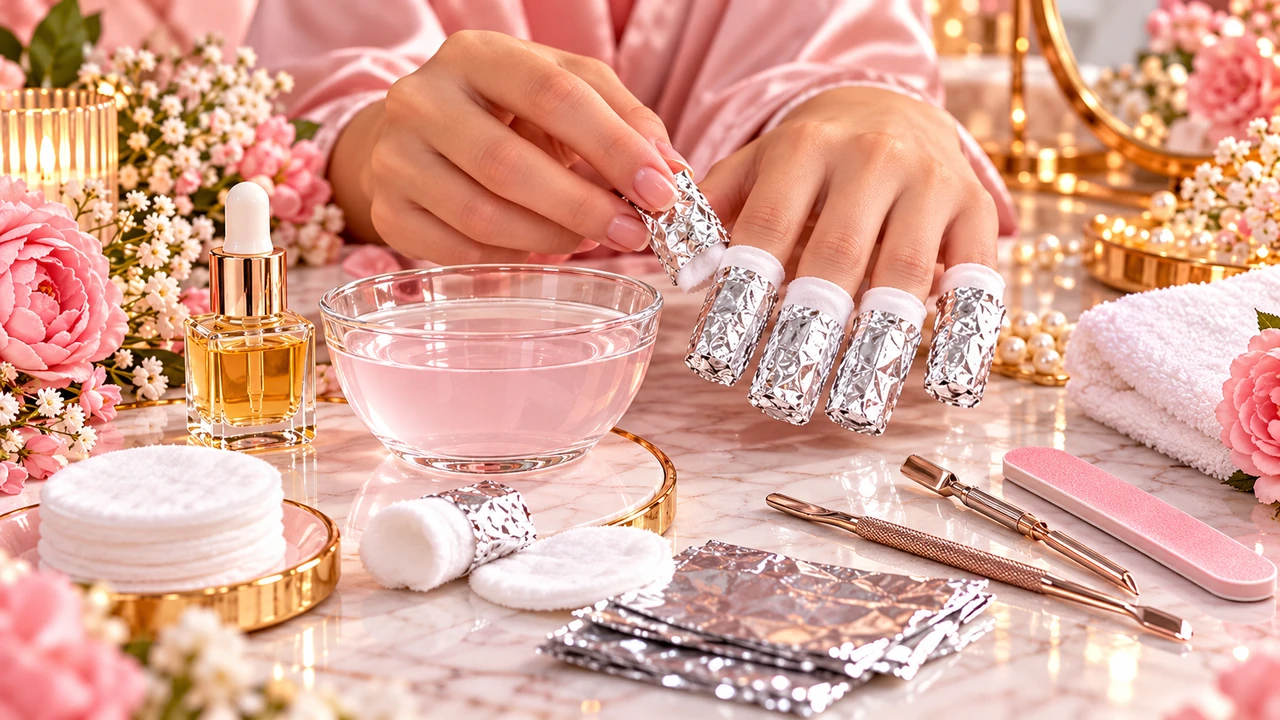
If you are searching for how to remove gel nail polish at home, the most important distinction is the product on your nails. Soak-off gel polish is different from hard gel, builder gel, acrylic overlays and some extension systems. This article describes one careful acetone-based process in ten steps—not ten unrelated hacks. Trying to force a product off can strip layers from your natural nail.
Before you start
First confirm that you have a soak-off gel formula. If the product is hard gel, a thick overlay, damaged, painful or unfamiliar, book a reputable nail professional. Never peel or pry lifting gel, and do not try to soften it with household chemicals, very hot acetone or power tools.
10 practical ideas and steps
1. Identify the exact product
Check your salon receipt, bottle or technician’s instructions. Traditional soak-off gel typically softens with acetone; hard gel and some builder systems may not. If you cannot identify the material confidently, stop and get professional removal rather than extending soak time indefinitely.
2. Arrange a well-ventilated space
Work away from flames, heat sources and smoking because acetone is flammable. Protect the table surface with a barrier and towel. Have acetone, petroleum jelly, cotton cut to nail size, food wrap, a washcloth, mild soap and moisturizer ready before you begin.
3. Remove rings and examine your nails
Take off jewelry, wash hands and inspect for swelling, open cuts, redness, tenderness or signs of infection. If anything looks concerning, do not expose it to solvents. A clinician or qualified nail professional can help determine the safest next action.
4. Protect surrounding skin
Apply a narrow layer of petroleum jelly to the cuticle and nearby skin, avoiding the polish surface. This reduces unnecessary contact with acetone. Cut each cotton piece approximately to nail size so the solvent stays localized.
5. Use acetone only on the nail surface
Saturate the cotton with acetone and position it on the gel-coated nail. Do not submerge entire hands in a bowl of acetone. Keep solvents in suitable containers and follow product-label ventilation and safety directions.
6. Wrap gently with food wrap
Use small pieces of plastic wrap to hold cotton in contact with each nail, comfortably snug rather than tight. Dermatologists at the American Academy of Dermatology describe this approach as a way to help keep acetone on the nail. Avoid restricting circulation.
7. Allow the recommended soak period
AAD guidance describes about ten minutes of contact for removable gel polish, but formulas vary. Do not force off material that remains firmly bonded. If product instructions differ or the gel seems resistant, seek professional help instead of aggressive scraping.
8. Lift away only what has loosened
Unwrap a nail and gently wipe softened polish with a warm damp washcloth. Do not use sharp orange sticks, metal tools or vigorous filing to pry residue away. Natural nails should remain intact even if that means stopping before the finish is completely removed.
9. Wash and rehydrate
Wash with mild soap and water to remove residual solvent, then pat dry and use petroleum jelly or a fragrance-free moisturizer around the nails. Acetone can dry the skin temporarily, so extra gentle care afterward makes sense.
10. Give nails a break and watch for problems
Keep nails short, avoid another immediate aggressive service, and monitor for tenderness, splitting or persistent discoloration. If lifting, severe irritation or possible infection appears, seek a healthcare professional. For future gel manicures, consider UV protection for hands.
How to put this advice into practice
A useful rule: if removal starts to hurt, the process has stopped being gentle. Do not experiment with dental floss, a drill, concentrated cleaning solvents or boiling acetone. The American Academy of Dermatology explicitly cautions against picking and filing off gel polish.
Common mistakes to avoid
The biggest avoidable mistake is treating gel like a peel-off sticker. Prying gel upward removes microscopic layers of nail, which can leave a rough or fragile surface. Also avoid using lamps or heaters to accelerate acetone.
Frequently asked questions
Can I remove gel nail polish without acetone?
Some specialty peel-off systems have their own instructions, but standard soak-off gel is commonly removed with acetone. Water, toothpaste and household hacks are not reliable substitutes.
What if gel does not soften after soaking?
Do not scrape aggressively. You may have hard gel or an unfamiliar coating; professional assessment is safer.
Should I use a UV lamp during removal?
No. The gel removal process described here requires no lamp and no heat.
Know when acetone removal is the wrong answer
A thick structured overlay, hard gel service or glued-on extension may resist acetone even when the top layer looks shiny and thin. Continuing to soak and scrape can cause irritation without solving the problem. If the coating does not soften as expected, ask the salon what was applied and whether filing by a trained technician is required. A healthy natural nail is worth the extra appointment.
Why peeling feels easy but causes damage
When a flexible gel film lifts at an edge, it can be tempting to slip a tool underneath and pull. Unfortunately, the adhesive bond may be stronger than the top layers of natural nail. Peeling can take those layers with it, leaving patches that look white, rough or thin. Avoid equating the absence of immediate pain with a safe process. Gentle removal means allowing the appropriate coating to release instead of mechanically forcing it.
Planning your next manicure after gel
Once the coating is removed, give the nail surface time to settle and keep the skin moisturized. You can trim snagging edges and use a simple regular polish later if your nails feel comfortable and intact. People who frequently use gel should also consider covering the skin of the hands from curing-light exposure as recommended by dermatologists, and discuss repeated irritation with a qualified professional. Avoid applying a fresh coat simply to hide a painful nail.
Final thoughts
The safest home gel removal is careful identification, localized acetone contact and a gentle stop if polish resists. Protect the natural nail rather than rushing to reach a bare finish.
Related reading from NailShopHub
Images are illustrative NailShopHub category visuals, not verified Amazon product photographs. This article offers general educational guidance, not medical advice. Follow manufacturer instructions and seek professional care for pain, inflammation, infection or uncertain removal procedures.